Driving From Chicago to Canada Through Michigan With Kids
Choosing between the Detroit and Port Huron crossings, where to stop in Michigan, and which documents kids need in each direction.
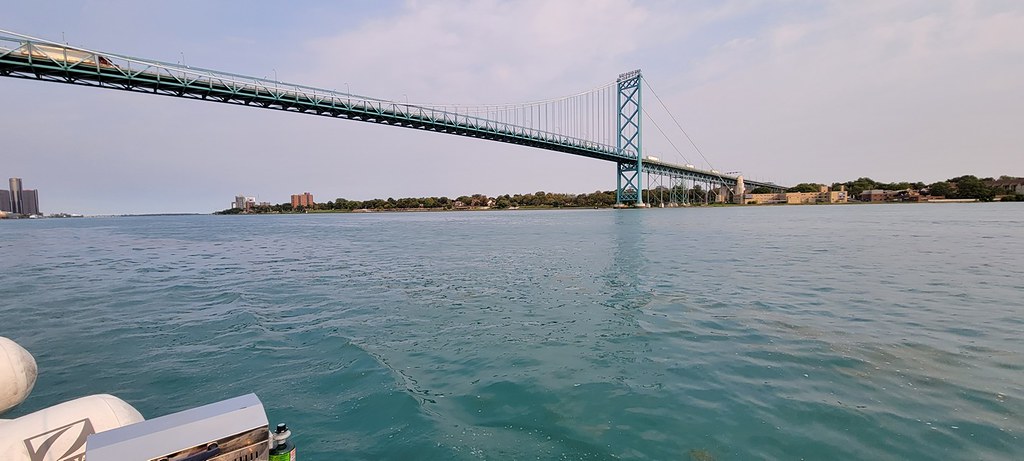
Photo: MUSTAD MARINE / Flickr, Public domain
Driving from Chicago to Ontario takes you straight across Michigan, and with kids in the back, the route you pick and the paperwork you pack matter more than usual. The good news is that both are simple once you know the options. This guide covers the main routes, sensible stops, and the documents children need at the border in both directions.
This is general information, not legal advice. Border rules can change, so confirm requirements with U.S. Customs and Border Protection and the Canada Border Services Agency before you travel.
Choosing your crossing
From Chicago, I-94 runs east through northwest Indiana and across southern Michigan to Detroit. From there you have three main crossings into Ontario, plus a fourth option farther north.
- Ambassador Bridge (Detroit to Windsor). The long-standing bridge crossing near downtown Detroit, leading toward Highway 401.
- Detroit-Windsor Tunnel. Downtown to downtown, under the Detroit River. Convenient if you are stopping in either city.
- Gordie Howe International Bridge. The newest crossing, in southwest Detroit, which opened to traffic in 2026 with a direct link to Highway 401. Check its official site for tolls and current operations.
- Blue Water Bridge (Port Huron to Sarnia). About an hour north of Detroit, connecting to Ontario’s Highway 402 toward London and Toronto. You can reach it by staying on I-94 past Detroit, or by taking I-94 to I-69 near Marshall and following I-69 through Lansing and Flint to Port Huron, which skips Detroit traffic entirely.
Which crossing is best depends on your destination in Ontario and the time of day. Both governments publish live border wait times, so check them in the hour before you arrive. A bridge that looks longer on the map can be faster if another crossing has a backup.

Stops that break up the drive
The drive to Detroit is about four and a half hours without traffic. With kids, plan for at least one real stop.
- Indiana Dunes National Park. Just off the route in northwest Indiana, close to Chicago. Too early for most families on the way out, but a good leg-stretch and beach stop on the way home.
- Kalamazoo. Roughly halfway, with plenty of food options near the interstate. The Kalamazoo Valley Museum downtown is a hands-on museum that makes a good indoor stop. Check its site for hours.
- Dearborn. The Henry Ford Museum of American Innovation and Greenfield Village are just west of Detroit. They need several hours, so treat them as their own stop, perhaps with an overnight, rather than a quick break.
- Frankenmuth. If you take the northern route toward Port Huron, Frankenmuth, a Bavarian-themed town north of Flint, is a short detour off I-75.
Documents for adults
Adults need a document that works at a land border. For U.S. citizens, the main options are a U.S. passport, a U.S. passport card, a NEXUS card, or an enhanced driver’s license from a state that issues them, which includes Michigan. A standard driver’s license on its own is not enough. Check the official lists, since accepted documents can change.
If you are flying home or might need to, a passport book is the only one of these that works for international air travel.
Documents for children
This is where families most often get caught out, so it is worth going slowly.
- Entering Canada. The CBSA asks travelers to carry proper identification for themselves and any children traveling with them. A passport is the most straightforward document for a child. Many families with younger children also bring a birth certificate as proof of citizenship. Read the CBSA’s guidance on travel and identification documents before you go.
- Returning to the U.S. by land. Under U.S. rules, U.S. citizen children under 16 arriving by land or sea from Canada may present a birth certificate (original or copy), a Consular Report of Birth Abroad or a Certificate of Naturalization instead of a passport. Older teens generally need the same kind of document as adults. Check the current rules on cbp.gov.
Traveling with only one parent, or with other adults
If a child is crossing with only one parent, with grandparents, or with another adult, bring a consent letter from the parent or parents who are not traveling. Canada does not legally require one, but border officers may ask for it, and not having one can mean extra questions or a call to the absent parent. The Government of Canada recommends a letter for any child traveling without both parents and suggests having it signed in front of a witness, ideally a notary. It publishes a consent letter template you can use.
Parents who share custody should also carry copies of their custody documents. If a parent has died, bring a copy of the death certificate.
At the booth
- Have documents for everyone in one place, ready to hand over when you pull up.
- Turn off the radio and take off sunglasses. Officers may want to see and speak to everyone in the car, including kids.
- Answer only what is asked, and answer honestly. Officers often ask children simple questions, so let them answer.
- Declare food. Both countries restrict some fruit, vegetables, meat and dairy. Eat road-trip snacks before the border or declare them.
For more drives from the city, see our roundup of road trips from Chicago with kids. And a week before you leave, photograph every document and store copies on your phone. If something goes missing on the trip, a photo will not replace it, but it makes the conversation at the booth much easier.